Bare branches in November don't always mean a dead tree. Here are the quick checks that separate a dormant tree from a dying one, and what to do about each.
Every fall the same question comes in: “the leaves are gone, how do I know if my tree is dead?” For a deciduous tree, bare branches in November are normal. What you want to know is whether the tree will leaf out in spring. These are the simple checks homeowners in Painesville, Lake County and around Northeast Ohio can do themselves, and what each result means.
1. The scratch test
Pick a small twig on a few different branches and scrape a patch of bark with your fingernail or a knife. Green and moist underneath means that branch is alive. Brown and dry means it’s dead. Test several branches on different sides of the tree, because one dead branch doesn’t mean a dead tree.

2. The snap test
A live twig bends before it breaks. A dead one snaps cleanly and feels dry and brittle. Again, check more than one branch and at different heights.
3. Look at the buds
In fall and winter, a healthy deciduous tree has small, plump buds at the branch tips for next year. Missing, shrivelled or dry buds point to a branch (or a tree) in trouble.
4. Don’t rely on leaves alone
Some trees, oaks and beeches among them, hold on to brown leaves through the winter even when they’re perfectly healthy. And a tree that’s already dead can hang on to leaves for a while. Leaves tell you something, but the scratch and snap tests are better evidence.
5. Look at the trunk and the base
Mushrooms or conks on the trunk or at the base, bark that’s falling off in sheets, deep cracks, cavities and soft, crumbling wood all point to decay inside the tree, whatever the canopy looks like. A tree like that can fail even with leaves on it. Our guide to the signs a tree needs to come down covers the structural ones in more detail.

What to do with each result
- Mostly alive, a few dead branches: the tree needs trimming to take the dead wood out, especially over a roof or driveway.
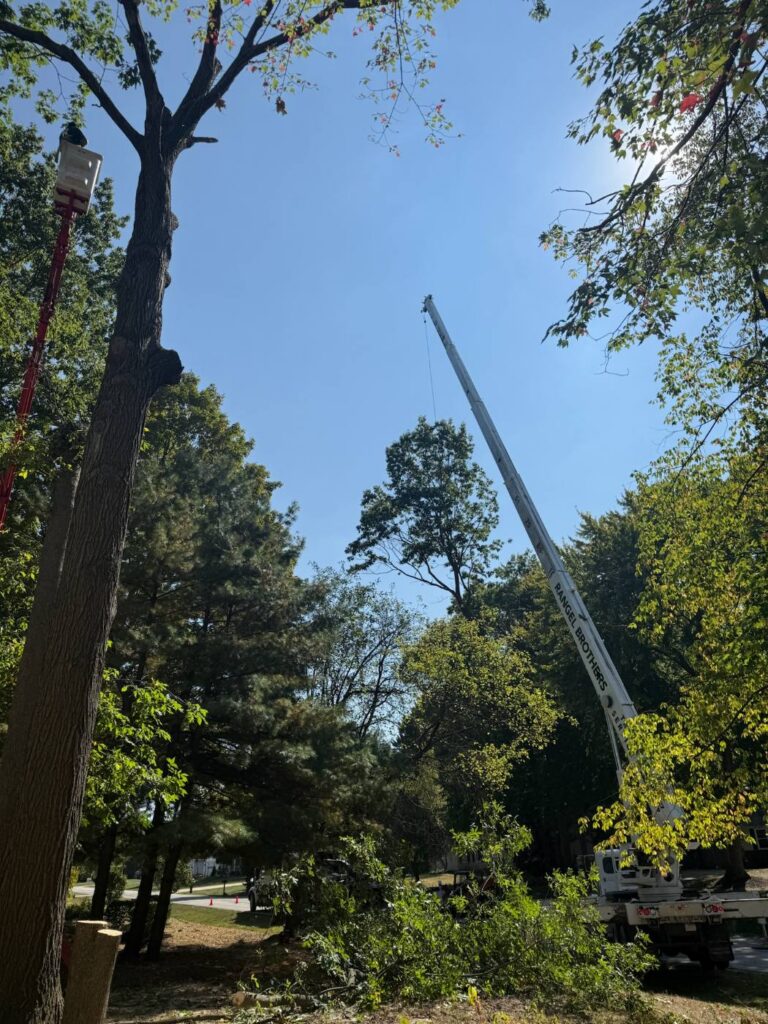
- Mostly dead, or dead at the trunk: it’s safer to remove it. Dead trees get brittle and unpredictable, and they are not worth climbing. We take them down in sections, with the crane where there’s a house or garage underneath.
- Dormant and healthy: nothing to do. If it’s a tree you want to keep looking good, late winter is a good time to trim.
- Can’t tell: that’s what a free estimate is for.
Why not wait and see?
If the tree is far from anything, waiting until spring to see whether it leafs out is reasonable. If it’s over the house, the garage or the driveway, don’t wait for a winter storm to answer the question. Dead wood is much more likely to come down in wind and ice, and an emergency removal costs more than a planned one (what affects the cost).
We’ll look at the tree, tell you plainly whether it’s alive, dormant or a problem, and give you a real number if it needs work. It’s free, you don’t need to be home, and we’re insured and bonded. We cover Lake County and the surrounding Northeast Ohio counties: see where we work, request a free estimate, or call 440-901-8427.