Some trees need a good trim; others need to come down. Here's how to tell the difference, what weight reduction can and can't fix, and when removal is the safer call for your Painesville or Lake County property.
Most calls start the same way: “I’ve got a big tree, do I need it gone or just cut back?” Both are real answers. Tree trimming can fix a surprising number of problems, and tree removal is the better call for others. This is how we decide when we walk a property in Painesville or anywhere in Lake County.
When trimming is enough
If the trunk is sound and the tree is healthy, trimming usually solves it. That covers branches over the roof, deck or driveway, a limb that cracked, canopy crowding a neighbour’s lot, and the plain case of a healthy tree you want to keep looking good. The work is weight reduction and shaping: taking weight out of the long limbs and removing the broken and overhanging ones, so the tree stays balanced instead of getting butchered.

When removal is the safer call
Trimming can’t fix a structural problem. A trunk that is split or hollow, a tree that’s dead or mostly dead, deep decay at the base, or a lean that’s getting worse are all removal situations, because cutting back the canopy doesn’t change what’s holding the tree up. Our guide to the signs a tree needs to come down goes through each one, and what to do first if one has already fallen.

The questions we ask on the walk-around
- Is the trunk sound? Cracks, cavities, mushrooms at the base and peeling bark all matter.
- What is it over? A tree over a roof, a garage or a fence line carries more risk than one in the open.
- What is the tree doing now? A new lean, new dead branches or heaved soil mean it’s changing.
- What do you want from it? Shade, privacy and a view are all reasons to trim instead of remove.
How it’s done
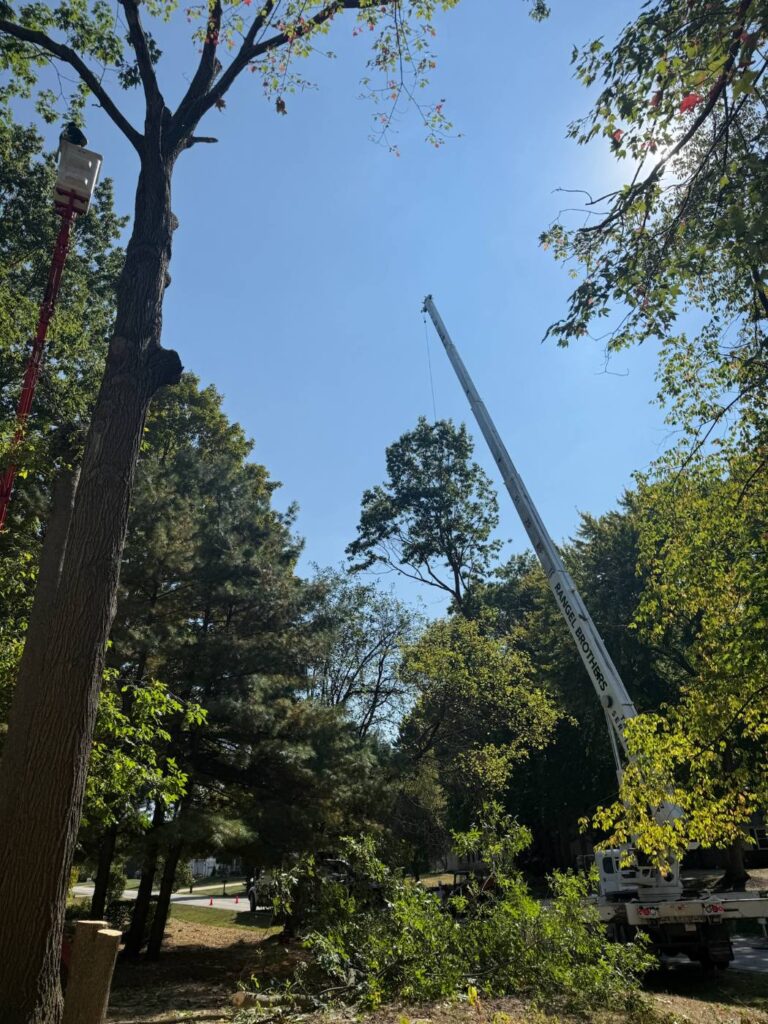
Trimming a tall tree is done from the bucket or the tracked spider lift, so limbs come off in controlled sections. When a tree does have to come down over a structure, the 108-foot crane takes the weight of each section before the cut. If the stump is going too, it can be ground out in the same visit (why that’s usually worth it). The best season for trimming is a separate question, covered in when to trim trees in Northeast Ohio.
Not sure which one you need?
That’s what the estimate is for. We look at the tree, tell you plainly whether it needs trimming or removing, and give you a real number for the work. It’s free, and if the answer is “trim it,” that’s what we’ll quote. See what happens during a free estimate, and what affects the cost. Serving Lake County and the surrounding Northeast Ohio counties: check our service area or request a free estimate, or call 440-901-8427.